
Mar 5, 2026
What Des Moines Homeowners Need to Know Before Problems Turn Serious
Your electrical panel is the control center of your home. It quietly distributes power to every light, outlet, appliance, and system in the house. But like anything else, it has limits. And in many Des Moines–area homes, those limits are being pushed harder than ever.
Between EV chargers, finished basements, hot tubs, home offices, electric ranges, and garage heaters, today’s homes demand significantly more power than they did 20–40 years ago. If your panel wasn’t designed for modern electrical loads, it may already be maxed out.
Here’s how to tell.
Why Panel Capacity Matters
Your panel’s amp rating (typically 100, 150, or 200 amps in most Iowa homes) determines how much electricity your home can safely handle at one time. That capacity is governed by standards from the National Electrical Code (NEC), which ensures systems are designed and installed safely.
When your panel is maxed out, it’s not just inconvenient — it can become:
A fire risk
A constant nuisance
A barrier to upgrades
A red flag during home sales
A limitation for future improvements
Let’s break down the most common warning signs.
1. Your Breakers Trip Frequently
Occasional breaker trips are normal. That’s the breaker doing its job.
But if:
Your kitchen trips when you run the microwave and toaster together
The garage trips when using power tools
The basement trips when the space heater kicks on
You reset the same breaker repeatedly
…that’s a red flag.
Frequent tripping means you’re drawing more current than the circuit (or panel) was designed to handle. In older 100-amp homes around Des Moines, this is extremely common — especially after remodels or additions.
If you find yourself “managing” which appliances you can run at the same time, your panel may be undersized.
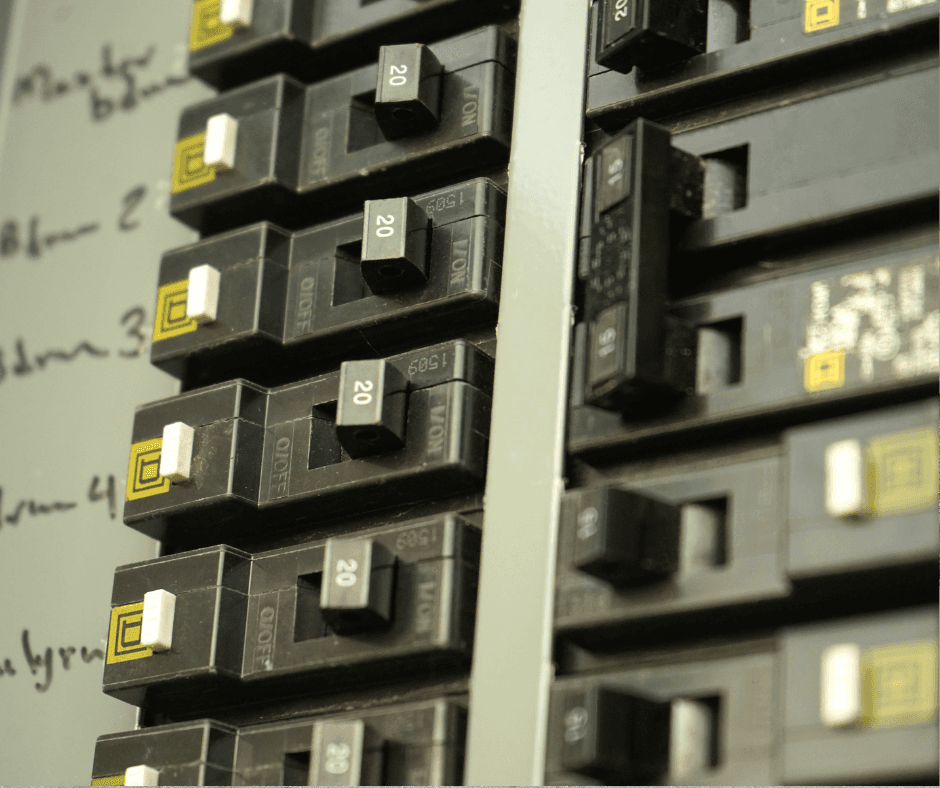
2. You Have No Open Breaker Slots
Open your panel (only if you feel safe doing so) and look at the breaker layout.
If:
Every slot is filled
Tandem breakers are used everywhere
There’s no room for future circuits
…your panel is physically full.
Homeowners in Grimes, Urbandale, and West Des Moines often run into this issue when adding:
EV chargers
Basement finishes
Hot tubs
Detached garage heaters
Additional kitchen appliances
If there’s no space left, adding anything new becomes complicated and expensive.
A packed panel is one of the clearest signs you’re at capacity.
3. You’re Using Multiple Power Strips Everywhere
While power strips themselves aren’t bad, needing them in every room may indicate insufficient circuits.
If:
Bedrooms share one circuit
The office shares with hallway lighting
The garage shares with interior outlets
Your home may have been wired for older electrical demands.
Modern homes require more dedicated circuits than homes built in the 70s, 80s, or early 90s. If your lifestyle has outgrown your wiring, your panel likely has too.
4. Lights Flicker or Dim When Appliances Turn On
Do your lights dim when:
The AC starts
The refrigerator cycles
The sump pump kicks on
The microwave runs
Momentary dimming can be normal. But noticeable or frequent dimming may indicate your panel is nearing its limits — especially if large loads are competing for available capacity.
In Iowa winters, when furnaces, humidifiers, and space heaters all operate at once, this becomes more obvious.
5. Your Panel Is 25–40+ Years Old
Even if it hasn’t “failed,” age matters.
Panels installed in the 80s and 90s were not designed for:
EV charging
High-efficiency HVAC systems
Multiple refrigerators/freezers
Electric vehicle charging
Smart home systems
Home offices with heavy electronics
Older panels also lack modern safety features like arc-fault and ground-fault protection required by today’s NEC standards.
If your panel is original to a 30-year-old home in the Des Moines metro, it may not technically be broken — but it may absolutely be maxed out for modern life.
6. You’re Planning to Add an EV Charger
This is the big one right now.
Level 2 EV chargers — like those used for many vehicles from Tesla, Ford Motor Company, and Chevrolet — can require 40 to 60 amps of dedicated capacity.
If you have:
100 amp service
An electric range
Electric dryer
AC unit
Finished basement
You may not have enough headroom for EV charging without upgrades.
Many homeowners discover their panel is maxed out when they try to install a charger.
7. You’ve Added Onto the Home
Finished basement?
New addition?
Garage conversion?
Outdoor kitchen?
If the original panel wasn’t upgraded when square footage increased, your system may now be undersized.
Electrical demand increases with:
Square footage
Appliance count
HVAC equipment
Convenience outlets
Homes in Adel and rural Polk or Dallas County that started small and grew over time often outpace their original electrical service.
8. Warm or Buzzing Panel
This is serious.
Your panel should never:
Feel warm to the touch
Smell like burning plastic
Buzz or crackle
These are not “capacity” inconveniences — they are safety issues.
If you notice these signs, call a licensed electrician immediately.
9. Insurance or Home Inspectors Flag It
Certain older panel brands are more prone to issues. Two commonly flagged manufacturers include:
Federal Pacific Electric
Zinsco
If you’re buying or selling a home and your panel is called out during inspection, it may be both outdated and maxed out.
Insurance companies sometimes require replacement before issuing policies.
10. You’re Constantly “Planning Around” Your Electrical System
If you:
Avoid running multiple appliances
Don’t use space heaters because breakers trip
Worry about adding anything new
Delay upgrades because “there’s no room”
Your panel is likely operating at its limit.
You shouldn’t have to manage your electrical use like it’s 1985.
What Happens If You Ignore a Maxed-Out Panel?
Ignoring the problem can lead to:
Overheated wiring
Breaker damage
Reduced equipment lifespan
Fire hazards
Failed inspections during resale
Expensive emergency repairs
The good news? It’s preventable.
What Are Your Options?
Depending on your situation, solutions may include:
1. Panel Upgrade (100 → 200 Amp)
Most common in Des Moines metro homes.
2. Subpanel Addition
If service size is adequate but breaker space is limited.
3. Load Management Devices
Useful in EV scenarios where upgrading service isn’t ideal.
4. Full Service Upgrade
Sometimes the meter base and service entrance must be upgraded too.
An electrician can perform a load calculation to determine the right solution for your home — not just guess.
Is 200 Amps Enough Today?
For most modern Iowa homes under 3,000 square feet, 200 amps is sufficient.
However, if you have:
Two EVs
Electric heat
Large detached shop
Pool
Extensive outdoor lighting
Multiple HVAC systems
You may even consider 400 amp service.
Planning ahead is cheaper than upgrading twice.
The Bottom Line
Your electrical panel shouldn’t be something you “work around.” It should quietly and safely power your home — no tripping, no flickering, no limits.
If you’re experiencing:
Frequent breaker trips
No breaker space
Dimming lights
EV charger plans
Remodels or additions
…it may be time for a professional evaluation.
Electrical demand isn’t decreasing — it’s increasing every year.
If you’re in Des Moines, Grimes, Urbandale, Clive, West Des Moines, Adel, or surrounding communities and suspect your panel may be maxed out, scheduling an inspection now can prevent bigger issues later.
Upgrading your panel isn’t just about convenience.
It’s about safety, future readiness, and protecting your investment.